7 NFL Stadiums Install Grass for World Cup: NFL Too Cheap to do so for Their Players
7 different NFL stadiums have installed grass fields for the World Cup. Why can't the NFL do that for their players? Money.
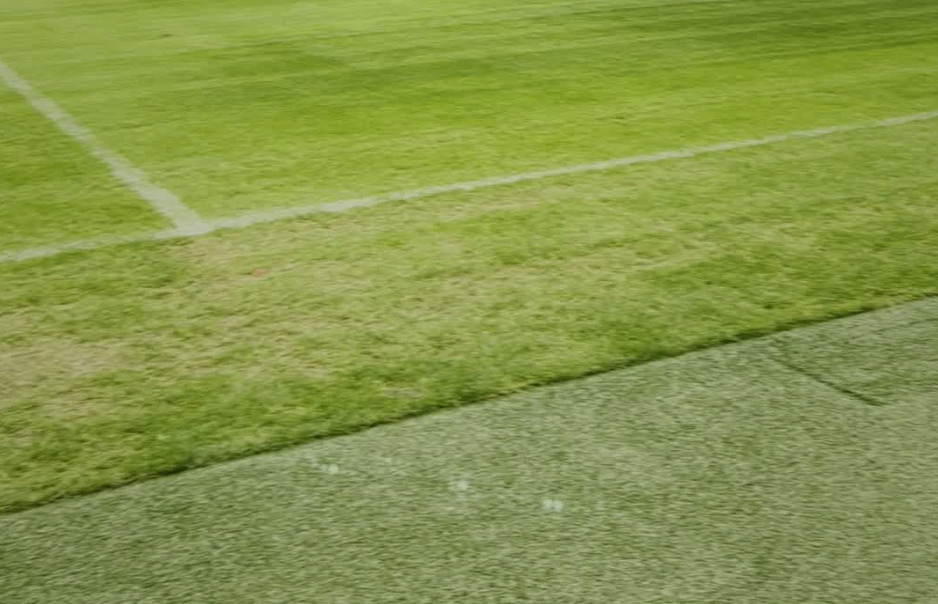
The 2026 World Cup is being played in 11 NFL stadiums, 7 of which usually use artificial turf, but FIFA forced them to install grass fields.
That's proven the NFL could simply install grass fields, even for indoor stadiums, or ones with retractable domes. Like the Denver Broncos new stadium will be.
But the NFL is too cheap to take care of their players, even if 92% of them prefer grass fields as a playing surface.
NFL is Too Cheap to Install Grass Fields in Indoor Stadiums
This 2026 World Cup has proven the NFL could have all their athletes playing on grass fields. Instead, the NFL is too cheap to do so.
Consider that the National Football League made more than $23 billion last year, which was not only a record but it was an increase of more than 14% year over year per S&P Global.
Meanwhile, the four biggest soccer leagues—the Premier League, Bundesliga, La Liga, and Serie A—made roughly the same revenue ($24.8B) combined.
That's to say those four leagues, who are each much smaller in terms of revenue than the NFL, can all operate with grass turf fields. So the NFL clearly could too.
Of course, artificial turf is a bit cheaper than real grass.
There's less maintenance needed. Conversely, grass takes a lot of time, effort, care (see: money) to maintain. Especially when you're talking about a cold environment, or even more so for an indoor stadium where the light doesn't shine like it does at outdoor venues.
But according to Safe Healthy Playing Fields' study, the maintenance is actually very similar in cost. They say the total cost of maintenance is anywhere from $23,000-127,000 for synthetic turf, while a grass field costs $42,000-205,000.
The big difference is those artificial surfaces need to be replaced every 8-10 years, and that ends up making them more expensive in the long run. In the day-to-day though, grass fields require some 870 man hours per year vs. 355 man hours for artificial turf. One has to assume the man hours increase if you're talking about growing grass in an indoor stadium.
From that same Safe Healthy Playin Fields' study, a quote from Brian Wolfson of Duke University Soccer Politics Blog, "Maintaining a natural grass field is slightly more expensive than a turf field, but not by a significant margin. Plus, if one takes into consideration the $500,000 that must be paid every 8-10 years to replace the carpet of an artificial turf field, and the fact that it is at least $250,000 more expensive to implement, then using natural grass ends up being cheaper in the short and long run."
This, per Scarves and Spikes, explains how they grew the grass for Mercedes Benz Stadium in Georgia. First, they used grass grown in north Georgia, but ripped that out so FIFA approved grass could be put in in May.
The current grass will actually be ripped out in May before the actual World Cup pitch is laid down. Fullerton stated the only difference is that the current version has the hybrid material already stitched into the grass at the farm, while the FIFA pitch – coming from a FIFA-contracted farm in Colorado – will have the hybrid material stitched in onsite at Mercedes-Benz Stadium. They’ll use what’s best described as a giant sewing machine to add in the fiber.
For context, the vast majority of Premier League stadiums use a similar or identical system, along with others like Barcelona’s Camp Nou, Bayern Munich’s Allianz Arena, and a handful of American Football fields and rugby fields.
Sounds fancy. Hybrid fiber/grass fields.
Which also sounds awesome and something the NFL should be doing.
If the league is the most profitable league in the world, it should be investing in this crazy hybrid grass full stop. If the NFL owners want to build domes nonstop because they can host a Super Bowl once in a generation, and maybe an NCAA Tournament, and even a Taylor Swift concert or two, they should also be willing to fork out tons of money for the fanciest grass known to man.
Note: There is an environmental impact when using real grass. It takes roughly 10 gallons of water per square foot to manufacture artificial turf and 40-60 gallons per square foot per year to water real grass.
NFL Players Want to Play on Grass, Which is Safer
The NFL is constantly trying to point to their new rules making the game safer; one way to do so is to play on grass all the time.
Targeting is another rule change, and the new dynamic kickoff has also improved the safety for players.
At the same time, the NFL increased the total regular season games from 16 to 17 in recent years, and they will soon be increasing it again to 18 regular season games. Plus, all 32 teams will be playing overseas every year soon; that increased travel likely hurts players' ability to recover.
And there's evidence that playing on grass is safer than playing on artificial turf. They don't have to take FIFA's word on it, the NIH has a published study specifically focusing on NFL injuries on turf vs. grass.
Their findings were 1.22 injuries per game on grass vs. 1.42 injuries per game on turf from 2021-2022.
That means playing on grass is 14% safer than playing on turf.
And it doesn't bring into focus the major injuries like achilles, MCL and ACL tears which occur more regularly on turf.
One such case was Aaron Rodgers' torn achilles on the turf at MetLife Stadium in New Jersey in 2023. Last year, Malik Nabers tore his ACL on that same MetLife turf. And Joe Burrow sustained a severe turf toe injury, missing nine games last year. These are only a few of the big names who've been injured on artificial turf in recent years.
David Bakhtiari, the retired Green Bay Packers tackle and former teammate of Rodgers was pissed when Rodgers was injured. “Congrats NFL. How many more players have to get hurt on ARTIFICIAL TURF??! You care more about soccer players than us,” Bakhtiari wrote on X in 2023. “You plan to remove all artificial turf for the World Cup coming up. So clearly it’s feasible. I’m sick of this… Do better!”
There, Bakhtiari called out the NFL and this 2026 World Cup's use of grass fields in the indoor stadiums.
And the NFLPA did something similar, recently posting their internal polling with players. 92% of them want to play on grass over turf.
The statement reads: "The temporary installation of natural grass fields for the World Cup is a choice by certain NFL team owners to do for soccer players what they refuse to do for NFL players. It's no longer a question of capability; the technology exists, the expertise exists and the resources exist to install the high-level grass fields that our players overwhelmingly prefer.
NFL players—who regularly compete on these fields, help fund these stadiums and whose work makes the league what it is today—deserve the same commitment to quality grass fields."
The NFLPA's JC Tretter wrote a longer piece about the players' association advocating for grass fields both for practice as well as game situations.
In it, they state, "Specifically, players have a 28% higher rate of non-contact lower extremity injuries when playing on artificial turf. Of those non-contact injuries, players have a 32% higher rate of non-contact knee injuries on turf and a staggering 69% higher rate of non-contact foot/ankle injuries on turf compared to grass."
Right now, this 2026 World Cup is exposing the NFL and their cheap ways. It's exposing how little the NFL really cares about player safety, which we already knew. See: CTE.
Thanks for reading. Please subscribe today. Or leave a tip in the tip jar!
Follow The Broncos Blitz on Bluesky!
Rich Kurtzman was born and raised in Denver Colorado and attended Colorado State University in Fort Collins in the aughts. He's been a professional writer since 2011, covering Colorado State football and men's basketball, as well as the Denver Broncos, for many outlets. Current Denver Broncos work can be found on Mile High Sports. Previous credits include CBS Denver and The USA TODAY Sports Media Group.
Comments ()